A 43-page site for a one-rig, veteran-owned junk removal and light demolition outfit
A new site on the same domain, built around how this business actually quotes: call, or text a photo. 43 pages, 20 town pages, every claim checked against what the owners can back up.
Cowboy Site Services · McKinney, TX · Collin + Grayson Counties · Launched July 2026 · Visit the live site
The business
Cowboy Site Services
Cowboy Site Services is a veteran-owned, owner-operated junk removal and light demolition business. They run one rig, a heavy-duty pickup pulling a 14-foot dump trailer, with an owner on every job. They take 11 kinds of work, from single-item pickups and garage cleanouts to hot tubs, sheds and remodel debris, across 20 towns in Collin and Grayson counties.
They price by how much room a load takes on the trailer, with three published starting prices, and confirm the number on site before anything gets loaded. They already had a site on the domain. We replaced it with this build and pointed every old .html address at its new page so nothing that was indexed or linked got dropped.
What we built
The new site, piece by piece.
The 43 pages
- 12Core
- 11Service
- 20Town
Structure
43 pages in the sitemap: 12 core pages (home, services, service areas, pricing, reviews, gallery, about, FAQ, contact, a realtor page, terms, privacy), 11 service pages and 20 town pages. Every page renders from one data file, so adding a service or a town is a data edit, not a new page.
Design system
Three color fields, navy, bone and red, alternating down every page, with the red band used once per page for the closing call to action. A contrast script checks all 38 color pairings against accessibility standards on every build and fails the build if one slips.
Call and text first
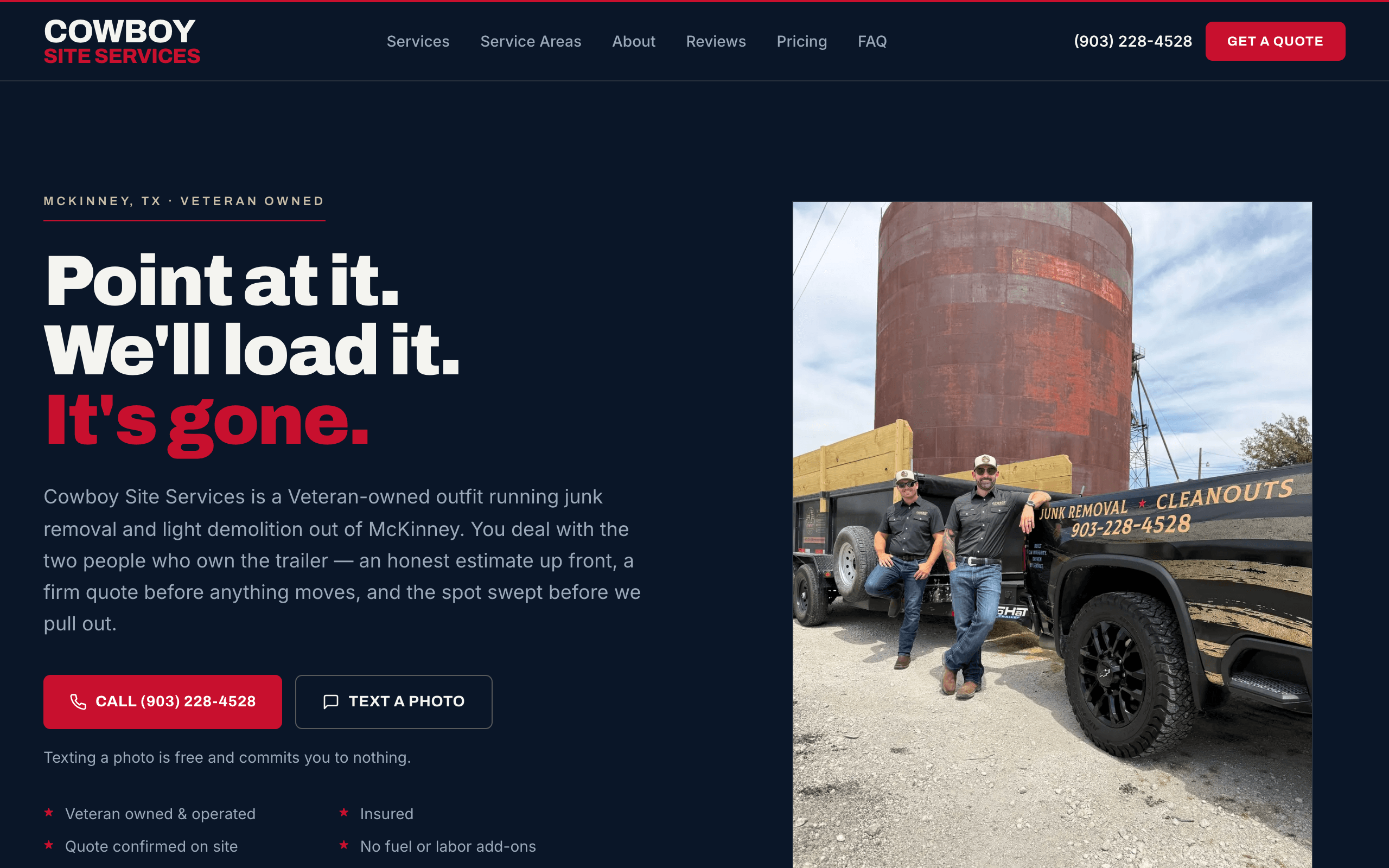
Call and Text a Photo sit in the first screen of every page template. On phones a sticky bottom bar keeps both one tap away with equal weight, because texting a photo is how this business actually quotes. Desktop gets a sticky Get a Quote button.
One quote form
The quote form lives on the contact page only, and every Get a Quote button goes there. It's the business's own Jobber work-request form, so requests land in the same software they run jobs from.
Real proof only
The homepage hero and the gallery use the owners' own before-and-after job photos. Pairs shot from different spots sit side by side instead of in a drag slider, so the slider never implies a match the photos don't have. The reviews page shows 13 five-star Google reviews word for word, and the star count is calculated from those reviews, not typed in.
Claims gated to the facts
The business carries insurance but no trade license, so the site says Insured and never Licensed. One setting decides that word everywhere. No job counts, no newness language and no response-time promises the owners haven't made.
Schema
Home and construction business markup with hours, service area and profile links on the homepage. Service markup on the 11 service pages, service-area markup on the 20 town pages, FAQ markup, and breadcrumbs across the site. Reviews stay out of the markup on purpose, since they come from Google.
AI-search readiness
robots.txt allows every crawler, AI crawlers included, and points to the sitemap. The business record is machine-readable on the homepage: name, phone, email, hours, the towns served and linked profiles, all matching what the pages say.
Speed
Lighthouse, run in September 2026: desktop performance scored 100 on the home, service, town, pricing and FAQ templates. Mobile scored 93 to 99 across repeat runs on the home, service, town and FAQ templates.
Tracking and redirects
Microsoft Clarity records sessions on the live domain only, disclosed in the privacy policy. All 14 old addresses, including the old .html pages, permanently redirect to their new pages, and www folds into the main domain.
Why it's built this way
The calls we made.
This is a one-truck, owner-run business. The fastest way for a customer to get a price is to text a photo of the pile, so the site puts Call and Text a Photo in front of every visitor and treats the form as the slower third option. There's one form, on one page, going into the software the owners already use.
A new business earns trust with what it can prove. So the site leans on the owners' own job photos, real reviews shown word for word, and published prices. Anything the owners can't back up stays off the page. That meant no license claim, no turnaround promises and no job counts, and nothing that would go stale in two years.
The towns and services all come from one data file, with build checks that fail on a bad color pairing or a town placed outside the service area. That keeps a 43-page site honest as it grows, and it made cutting over from the old site on the same domain a redirect list instead of a loss of what was already indexed.
How a build like this runs, start to finish: See how we work →